> For the complete documentation index, see [llms.txt](https://docs.apica.io/llms.txt). Markdown versions of documentation pages are available by appending `.md` to page URLs; this page is available as [Markdown](https://docs.apica.io/integrations/list-of-integrations/docker-compose.md).
# Docker Compose
### Overview
Gathering logs from docker-compose scripts is easy to do and all it takes is for your to configure the fluentd driver to push data to Apica Ascent
Lets look at a simple compose file with a single service *"web"*
```yaml
version: '3.7'
services:
web:
image: wordpress
ports:
- "89:8080"
logging:
driver: "fluentd"
options:
fluentd-address: 192.168.68.114:24224
labels: "namespace,application,production_status,cluster_id"
env: "os"
labels:
production_status: "testing"
namespace: "us-east-1"
application: "wordpress"
cluster_id: "cluster1"
environment:
- os=ubuntu
```
### Specifying the logging driver
The *fluentd* logging driver can be configured to send logs directly to Apica Ascent either via TLS or non-TLS. use port *24224* for non-TLS and port *24225* for TLS.
```yaml
logging:
driver: "fluentd"
options:
fluentd-address: 192.168.68.114:24224
labels: "namespace,application,production_status,cluster_id"
env: "os"
```
### Adding metadata
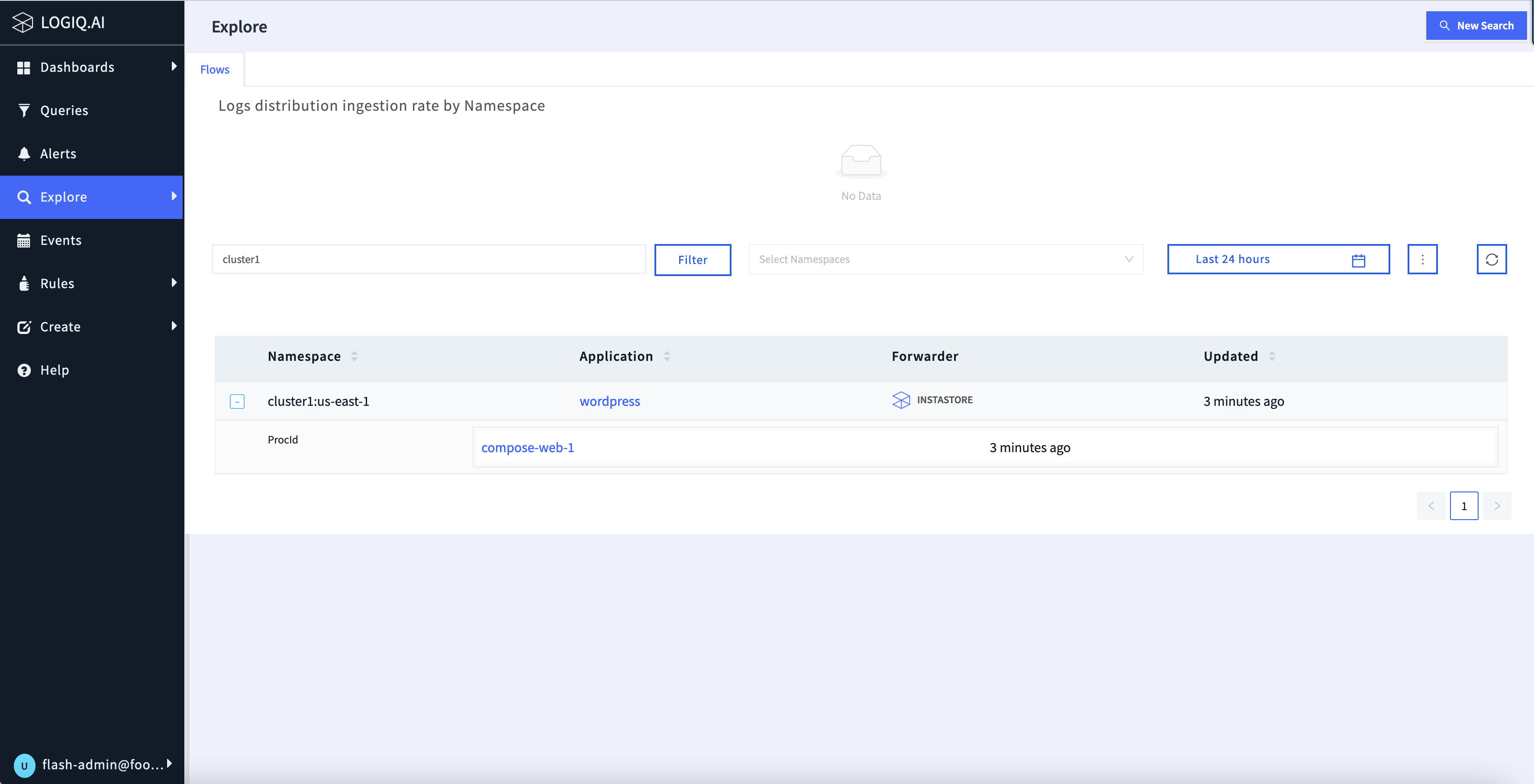
Logs get organized in Apica Ascent as flows. A Flow is a combination of a *Namespace* and an *application*. You can optionally also add a third grouping attribute *cluster\_id*.
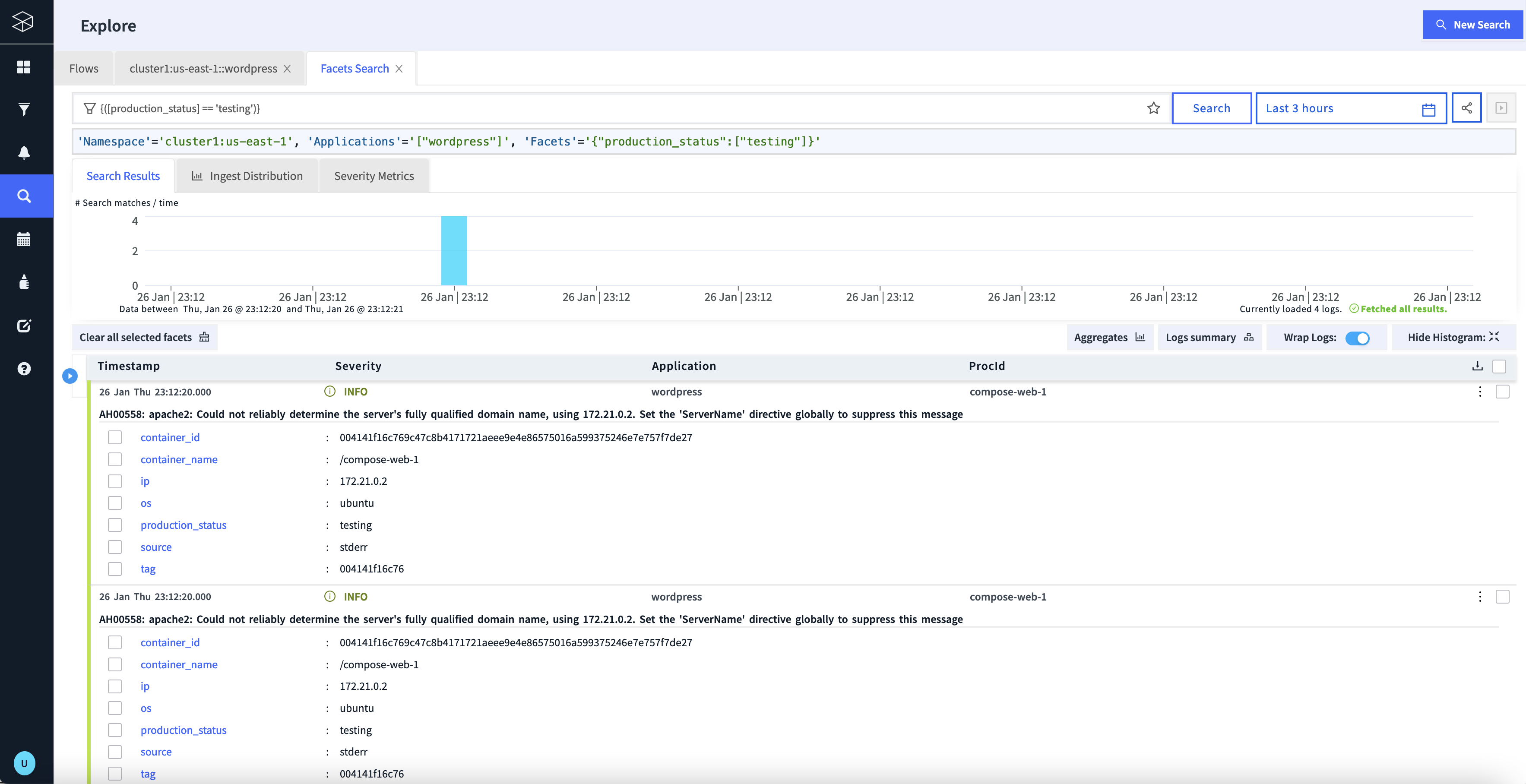
Aside from this, the labels and environment section allows additional metadata to be sent with logs and can be used for search indexing, aggregate queries
```yaml
labels:
production_status: "testing"
namespace: "us-east-1"
application: "wordpress"
cluster_id: "cluster1"
environment:
- os=ubuntu
```